The Stories We Tell Ourselves
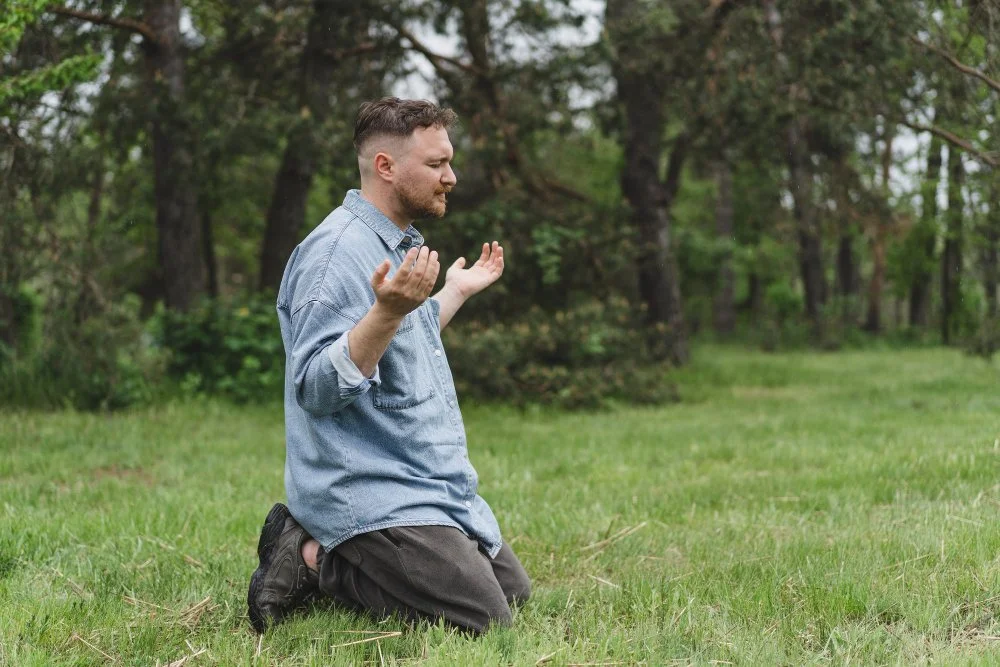
For this commandment which I command you this day, is not concealed from you, nor is it far away.
It is not in heaven, that you should say, "Who will go up to heaven for us and fetch it for us, to tell [it] to us, so that we can fulfill it?"
Nor is it beyond the sea, that you should say, "Who will cross to the other side of the sea for us and fetch it for us, to tell [it] to us, so that we can fulfill it?"
Rather, [this] thing is very close to you; it is in your mouth and in your heart, so that you can fulfill it.
The commandment that Moses speaks of in this verse on his last day is the commandment to do teshuvah, to return to G-d.
What does it mean that it is very close to you? Why indeed is it so close?
Bilaam, the non-Jewish prophet, says, "May my soul die the death of the upright and let my end be like his."
Why doesn't Bilam say, "May my soul live the life of the upright"?
A similar question could be asked about Elazar ben Dordaia, who, having been a sinner his entire life, we are taught, places his head between his knees and, in an act of return to God, surrenders his soul and his life. Why did he indeed die at this moment? Why didn't he complete his return and then continue living a righteous life?
Moshe's message addresses these two questions as well.
Oftentimes in life, we get stuck in the belief that the internal challenges and inner struggles we face cannot be overcome. So we imagine that in a moment of return, a moment of coming clean with ourselves, the only solution is death, because as long as we are alive, we will never be able to overcome these challenges.
To this end, Moshe tells us that it is not in heaven nor across the sea, but rather that the capacity to create this change in our lives is very close to us.
While it does indeed require an act of surrender, it also requires a belief in our ability to create change and realistic expectations of what that change might look like. Incremental change is a daily effort. Small changes over time create big change.
Bilam says, "Let my soul die," because he can't imagine living with the struggle. So at least he should die righteous, and perhaps the same can be said of Elazar ben Dordaia. In his moment of return to God, he surrenders his life because he can't imagine living successfully with the change. Moshe, however, tells us that change is possible. Not only can we die righteous; we can live righteous.
There is a Chabad tradition, as we near a new year, to adopt a small beautification of an existing mitzvah that we already do. It's interesting that the tradition is not necessarily to accept upon ourselves a mitzvah that we're not doing, but rather to beautify an existing one.
I think the message here is powerful and clear: if we wish to create real change, it requires small, incremental movements. It means letting go of the stories we have told ourselves about ourselves, and letting go of the gravitas that we lend to those stories. That does not mean discarding them, but it does mean not allowing them to dictate what we believe about ourselves or what we believe is possible.
As we approach a new year, I encourage you to find a mitzvah that you are already doing and find a way to do it a little better, a little more beautifully.
Best wishes for a Shanah Tovah, a happy and healthy year to you and all of your loved ones!
Continue Reading